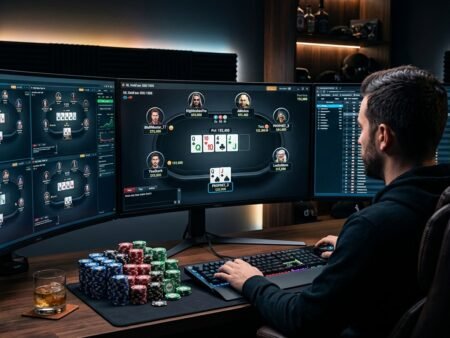
Poker near you is typically played in three settings — licensed casino poker rooms, dedicated card rooms/clubs, and private home games. Availability depends on your local laws, so always confirm a venue’s legal status before visiting.
If you’ve typed “where can I play poker near me” into Google, you’ve probably realized the answer isn’t as simple as a single address. Poker is played in wildly different settings — from carpeted casino card rooms to a friend’s kitchen table — and each comes with its own rules, atmosphere, and legal standing. This guide walks you through the main types of venues, what separates a serious poker room from a casual game, and what to check before you show up anywhere.
What “Where Can I Play Poker Near Me” Actually Means
This search covers a surprisingly broad range of intent. Some people mean a licensed casino poker room with dealers and structured games. Others mean a smaller, independent card club. Still others just want to know if a friend’s regular home game counts as real poker. Beginners often struggle here because the word “poker” gets used loosely — a casino poker room, a bar league, and a living-room game with friends are legally and structurally different things, even though the cards are the same.
The Main Types of Poker Venues, Step-by-Step
- Casino poker rooms — Regulated, dealer-run tables inside licensed casinos, usually offering Texas Hold’em, Omaha, and sometimes stud variants.
- Independent card rooms/clubs — Standalone venues, common in certain states and countries, that operate under specific gaming licenses separate from full casinos.
- Home games — Informal games among friends or acquaintances, legality of which varies enormously by local jurisdiction.
- Online poker platforms — Not a physical “near me” option, but often the first stop for beginners who want to practice mechanics before playing in person.
- Poker leagues or bar tournaments — Casual, sometimes non-cash structured events held at bars or social clubs.
How Local Poker Availability Actually Works
Whether poker is legally available near you depends on a layered set of rules: national gambling law, state or provincial regulation, and sometimes city-level licensing. A poker room can be fully legal one county over and completely unavailable in yours. This is why a generic web search sometimes shows results that aren’t actually accurate for your specific location — directories can be outdated, and licensing changes over time.
Common Mistakes Beginners Make When Searching
- Assuming any building with “casino” in the name has a live poker room (many casinos only offer poker via electronic tables or don’t spread it at all).
- Not checking a room’s minimum age requirement, which varies by jurisdiction.
- Confusing a poker room with a poker machine (video poker), which is a completely different, single-player game.
- Skipping the venue’s own website or phone confirmation and relying only on outdated map listings.
Pro Tip: Before making a trip anywhere, call ahead or check the venue’s official page — poker rooms often close or reduce tables based on daily demand, unlike slot floors which run continuously.
Key Terms You’ll Encounter While Searching
- Card room — A facility, sometimes standalone, licensed specifically to spread poker or other card games.
- Rake — The small fee a venue takes from each pot or per hour, which is how card rooms make money without banking the game.
- Spread — Industry term for which poker variants a room offers (“they spread Hold’em and Omaha”).
- Live game — Any in-person poker game as opposed to online play.
- House game — A game run by the venue itself rather than a private party.
How to Evaluate a Venue Before Visiting

Understanding a room’s structure matters more than its proximity. Look at table stakes (the minimum and maximum buy-in), game variety, and whether it’s dealer-run or self-dealt. Newer players often do better starting at a room with lower stakes tables and a visible “beginner-friendly” reputation, since table dynamics can vary enormously between a casual afternoon game and a serious evening session.
Pro Tip: Many card rooms post live table counts and wait times on their websites — checking this first can save you a wasted trip.
Myths vs. Facts About Local Poker Availability
| Myth | Fact |
|---|---|
| “Every casino has a poker room” | Many casinos only offer table games and slots, no live poker |
| “Home games are always legal” | Legality depends heavily on local law, stakes, and whether the host profits |
| “Online poker sites count as ‘near me’ options” | They’re not tied to physical location and operate under separate rules |
| “All card rooms require large buy-ins” | Many rooms offer low-stakes tables suitable for beginners |
Comparison Table: Types of Poker Venues
| Venue Type | Typical Structure | Regulation Level | Beginner Friendly? |
|---|---|---|---|
| Casino poker room | Dealer-run, structured stakes | High (state/national license) | Often yes, staff can explain rules |
| Independent card room | Dealer-run, smaller scale | Moderate (local license) | Varies by venue |
| Home game | Self-dealt or rotating dealer | Low/informal | Depends on group |
| Bar league/tournament | Casual, sometimes non-cash | Low | Yes, generally relaxed |
Conclusion
Finding where to play poker near you isn’t just a location question — it’s a question of venue type, legal status, and whether the setting actually matches your comfort level as a beginner. The three things to remember: casinos and card rooms differ meaningfully in structure, local law shapes what’s actually available to you, and checking a venue directly beats trusting an outdated map listing.
Curious what actually happens once you sit down at a table? A guide on poker etiquette for first-timers might be your natural next read. What kind of setting sounds more appealing to you — a structured casino room, or something more casual?
Not knowing where to look shouldn’t be the reason you never learn the game.
FAQs
Is there a poker room near me?
That depends entirely on your location’s gambling laws and licensed venues. Casino poker rooms and independent card clubs vary by state, province, or country. The best way to check is searching your region’s licensed gaming venues directly, since general web listings can be outdated or incomplete.
Where can I play poker near me for free?
Free poker is usually found in casual home games, some bar leagues, or online platforms offering play-money tables. Casinos and licensed card rooms typically operate on real buy-ins, since they’re regulated gambling businesses, not social clubs.
Do I need ID to play poker at a casino?
Yes. Nearly all licensed poker rooms require valid government ID to confirm you meet the minimum legal gambling age, which varies by jurisdiction — commonly 18 or 21.
What’s the difference between a casino and a card room?
- A casino typically offers multiple game types (slots, table games, sometimes poker).
- A card room is often licensed specifically for card games like poker.
- Card rooms may have different tax and regulatory structures than full casinos.
Can I play poker near me without gambling real money?
Yes — many bar leagues and some social clubs run non-cash or points-based poker events, which sidestep gambling regulations entirely while still teaching real gameplay mechanics.
How do I know if a local poker game is legal?
Legality hinges on local law, whether the host profits from hosting, and stake sizes involved. Checking your local or state gaming commission’s guidelines is the most reliable way to confirm before joining any game.