An NFL spin wheel is a segmented wheel — physical or digital — divided into slices representing teams, plays, prizes, or outcomes. A player spins it, and where the pointer lands determines the result. It’s used for fan giveaways, prediction games, trivia nights, and casual prop-style entertainment tied to NFL themes.
Ever watched a stadium screen light up as a giant wheel spins past all 32 team logos, slowing down bit by bit until it lands on one? That moment of suspense is exactly what makes the NFL spin wheel such a popular piece of fan entertainment. Whether it’s a physical prize wheel at a tailgate, a digital randomizer used in a fantasy draft, or an app-based game that predicts which team “wins” the spin, the concept is simple — but the mechanics behind a fair, well-built wheel are easy to misunderstand if you’re new to it.
In this guide, you’ll learn exactly what an NFL spin wheel is, how the mechanics work behind the scenes, the terminology you’ll come across, common mistakes beginners make when building or using one, and how to tell a genuinely random wheel from one that isn’t.
What Is an NFL Spin Wheel — and Why Do Beginners Get Confused?
At its core, an NFL spin wheel is nothing more than a randomizer tool shaped like a classic carnival wheel, with each segment representing something related to football — a team, a play call, a number, or a prize. You’ll find these wheels in a few common settings:
- Tailgate parties and stadium promotions, where fans spin for merchandise or shoutouts
- Fantasy football leagues, using a wheel to randomize draft order
- Sports trivia apps, spinning for categories or bonus questions
- Content creators and podcasts, spinning for “which team gets roasted this week”
Beginners often struggle because the term “spin wheel” gets used loosely across very different contexts. A wheel used to pick a fantasy draft order behaves completely differently from one designed for a prize giveaway, and neither has anything to do with betting odds — despite people sometimes conflating the two. The confusion usually comes from assuming every version works the same way, when really the segment count, weighting, and spin mechanism all change based on purpose.
The Rules Explained Step-by-Step
If you’re setting up or using an NFL spin wheel for the first time, here’s the general process:
- Define the categories. Decide what each segment represents — 32 NFL teams, prize tiers, trivia topics, or draft positions.
- Divide the wheel proportionally. Equal-sized segments mean equal probability; unequal segments mean weighted probability.
- Choose your spin mechanism. Physical wheels use friction and momentum; digital wheels use a random number generator (RNG) to pick an outcome, then animate the spin to match.
- Spin once per turn. Most formats use a single spin per participant to keep things fair and quick.
- Read the result where the pointer stops. The segment under the fixed pointer (not the one facing you) is the actual outcome.
- Log or announce the result. For group settings, someone typically records the outcome before the next person spins.
Following this order matters because skipping steps — like not fixing the pointer position or letting segment sizes drift — is exactly where fairness breaks down.
Pro Tip: Always check whether a digital wheel’s outcome is generated before or after the spin animation plays. Fair tools generate the result first, then animate toward it — never adjusting mid-spin based on where the visual happens to be.
How the Mechanics Actually Work Behind the Scenes
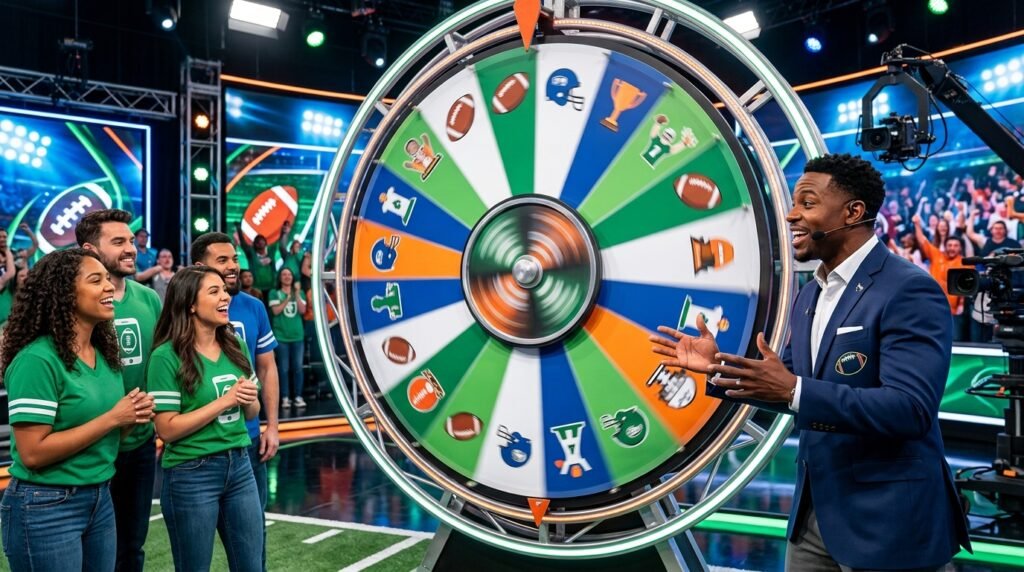
A physical NFL spin wheel relies on basic physics: initial spin force, friction from an axle or bearing, and gravity acting on a small flap or pointer that clicks past pegs until it loses momentum. The segment sizes directly determine probability — a 32-segment wheel with equal divisions gives each NFL team roughly a 3.1% chance per spin.
Digital versions work differently. Instead of physical momentum, they use a random number generator to select an outcome instantly, then render a spin animation for visual effect. This is a critical distinction: the spin animation is cosmetic, while the actual outcome was already decided by the underlying code the moment you clicked “spin.” Well-built tools use verified RNG libraries to keep this genuinely random rather than following a hidden pattern.
Common Beginner Mistakes to Avoid
Even something as simple as a spin wheel trips people up in predictable ways:
- Assuming equal segments when they aren’t. Some wheels weight certain outcomes (like popular teams) to appear more often, which changes true odds.
- Ignoring the pointer position. Reading the segment closest to you instead of the one under the actual pointer leads to wrong results.
- Reusing a wheel without resetting categories. Old entries left on a digital wheel can accidentally skew future spins.
- Confusing prediction wheels with betting tools. A spin wheel showing “which team wins” for fun is not the same as an odds-based sportsbook line — the wheel has no connection to real game outcomes or statistical modeling.
- Not testing the RNG. For digital wheels, running a handful of test spins before real use helps confirm the distribution looks reasonable.
Terms and Terminology You Should Know
- Segment: One slice of the wheel representing a single possible outcome.
- Weighting: Adjusting segment size or backend probability so some outcomes are more or less likely than others.
- RNG (Random Number Generator): The algorithm that determines a digital wheel’s outcome.
- Pointer/Flap: The fixed marker indicating the winning segment when the wheel stops.
- Draw vs. Spin: “Draw” typically refers to pulling from a shuffled list; “spin” refers specifically to wheel-based randomization — the visual difference matters for how fair the process feels to participants.
Tips for Understanding Spin Wheels Better
Because these wheels are meant for entertainment and organization rather than predicting real NFL outcomes, understanding them is more about recognizing fairness and mechanics than developing a “strategy.” A few things help:
- Look at the segment count before assuming anything about probability — more segments means each individual one is naturally less likely.
- If a digital wheel lets you customize entries, double-check duplicates aren’t accidentally skewing results.
- For group activities, agree on the rules (one spin per person, no re-spins) before starting, so there’s no dispute afterward.
- Treat the wheel as a randomizer for fun formats — draft order, trivia categories, prize giveaways — rather than as any kind of predictive tool for actual games.
Pro Tip: If you’re building your own NFL-themed wheel for a group activity, test it with at least 50 sample spins first. This gives you a rough sense of whether the distribution looks even or unintentionally lopsided.
Myths vs. Facts About NFL Spin Wheels
Myth: A spin wheel can predict which NFL team will actually win a game.
Fact: A spin wheel only reflects the segments and weighting built into it — it has no connection to real statistics, player performance, or game data.
Myth: Physical wheels are always more “random” than digital ones.
Fact: A poorly balanced physical wheel (uneven segment sizes, worn bearings) can actually be less random than a properly coded digital RNG.
Myth: Every spin wheel gives equal odds to every segment.
Fact: Many wheels are intentionally weighted for entertainment purposes, so equal segments don’t guarantee equal probability unless explicitly stated.
Comparison Table: Types of NFL Spin Wheels
| Wheel Type | Common Use | Randomization Method | Typical Segment Count |
|---|---|---|---|
| Physical prize wheel | Tailgates, stadium promos | Momentum + friction | 8–20 |
| Digital team-picker | Fantasy leagues, podcasts | RNG-based | 32 (one per team) |
| Trivia category wheel | Game nights, apps | RNG-based | 6–12 |
| Draft order wheel | Fantasy football setup | RNG or manual shuffle | Matches league size |
Wrapping It Up
An NFL spin wheel is a simple concept with more nuance underneath than most people expect. The three things worth remembering: segment size and weighting determine real probability, digital wheels decide the outcome before the animation even starts, and these tools are built for fan entertainment — not for predicting actual game results.
Next time you see a wheel spin across a stadium screen or a fantasy app, you’ll know exactly what’s happening behind that suspenseful slowdown. Curious how random number generators are tested for fairness in digital tools generally? That’s a great next read.
What’s the most memorable spin-wheel moment you’ve seen at a game or fan event?
FAQs
What is an NFL spin wheel used for?
It’s typically used for fan entertainment — things like prize giveaways at games, randomizing fantasy football draft order, picking trivia categories, or generating light-hearted “predictions” for content creators. It has no official connection to NFL game outcomes or league operations, and it’s designed purely as a casual, engagement-driven tool.
Are NFL spin wheels rigged?
Not inherently. Physical wheels can become unbalanced through wear, and digital wheels can be intentionally weighted for specific outcomes. Whether a wheel is “rigged” depends on: 1) whether segment sizes are equal, 2) whether the RNG code is transparent, and 3) whether the operator discloses any weighting. A well-built wheel discloses its rules upfront.
How does a digital NFL spin wheel decide the outcome?
A digital NFL spin wheel uses a random number generator to select the result the instant you click “spin,” then plays a visual animation that lands on that pre-determined outcome. The animation is purely cosmetic — it’s designed to build suspense, not to influence or determine which segment is actually chosen.
Can I build my own NFL spin wheel?
Yes — many free online wheel-builder tools let you input custom segments (teams, names, categories) and spin instantly. For fair results, keep segments equal in size unless you intentionally want weighting, and test the tool with several sample spins first to confirm it behaves the way you expect.
What’s the difference between a spin wheel and a sportsbook odds line?
A spin wheel is a simple randomizer with no connection to real statistics, injury reports, or performance data. A sportsbook odds line is calculated using historical data, team performance, and market activity to reflect the likelihood of a real-world outcome. They serve entirely different purposes and shouldn’t be confused.
Why do some NFL spin wheels have unequal segment sizes?
Unequal segments are usually intentional — event organizers may want certain prizes to appear less often, or content creators may want popular teams to show up more frequently for engagement. This is a design choice, not a flaw, as long as the weighting is disclosed rather than hidden from participants.