Poker chips personalised for home games outsell standard sets by nearly 3:1 — but most buyers end up disappointed within six months because they focused on looks and completely ignored the one thing that actually matters: chip weight and composition. That one oversight turns a premium-feeling setup into a rattling mess on the felt.
Here’s what you actually need to know before spending a penny. You’ll see why most players make the same buying mistake twice, why the customisation market is full of traps, and which details will genuinely transform your home game. Stick with this and you won’t have to do it twice.
What Are Poker Chips Personalised — and Why Do Most Players Get Them Wrong?
Imagine you’ve just decided to host a proper poker night. You want it to feel real — not like you raided a charity shop. So you search for poker chips personalised, see a dozen sites selling “casino-quality” sets, pick the one with the nicest label design, and order. Then they arrive. They’re lighter than you expected. The print looks slightly off. And six months later, the edges are chipping.
That’s the mistake 90% of buyers make — they treat personalised chips like a graphic design project when they’re actually a manufacturing decision. The customisation is almost secondary. What carries the feel of the game — the bankroll management psychology, the weight in your hand, the sound when they hit the pot — is the chip itself.
Most articles focus entirely on how to upload your logo or choose a font. What they skip is chip composition, which dictates everything from durability to how your game feels. Chips come in plastic, ABS composite, clay composite, and ceramic. Each has a different weight (measured in grams), a different sound, and a very different lifespan.
How Poker Chips Personalised Actually Work
Getting this right is a process, not a single decision. Here’s how to do it properly.
- Choose your chip material first: Decide between ABS composite (affordable, light), clay composite (the casino standard, 8.5–10g), or ceramic (fully printable surface, premium feel). The material determines everything downstream — don’t pick a design before you’ve locked this in.
- Set your denominations and colour scheme: Most home games run five to six denominations. Each colour represents a wager value — get this wrong and you’ll spend half the night clarifying what the blue chip is worth. Write it out before you order.
- Design your custom face: This is where personalisation happens. Upload a name, a logo, a photo, or a crest. Ceramic chips print edge-to-edge. Composite chips use a centre inlay. Know which format your supplier uses — the design has to be built for it.
- Order a sample set: Any decent supplier offers a sample. Don’t skip this. Colour calibration on screens is notoriously unreliable, and what looks sharp on your monitor can look flat on the chip.
- Confirm your full set count: Standard home games need between 300 and 500 chips for up to nine players. Underordering is the most common error — running out mid-game kills the atmosphere instantly.
Here’s something most guides won’t tell you: the minimum order quantities on premium ceramic chips are often 25 per denomination — meaning you’re committing to specific wager values before you’ve tested how your group actually plays. Order conservatively on the high-denomination chips and heavier on the middle values. You’ll thank yourself later.
Benefits of Poker Chips Personalised That Most Players Completely Miss
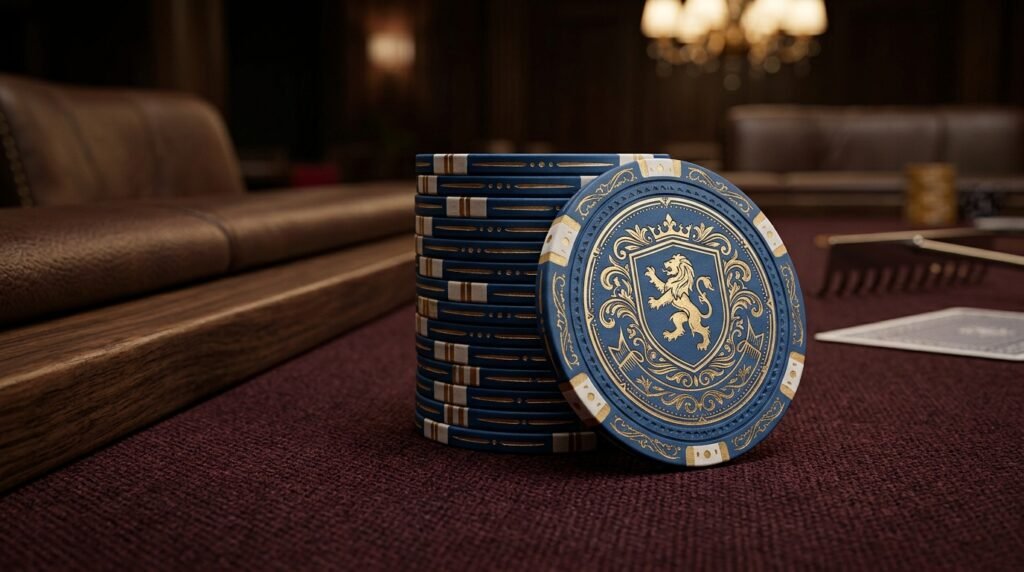
Poker chips personalised aren’t just about aesthetics. The real value runs deeper than most players ever realise.
Benefit 1: Built-in Bankroll Management Discipline
When every chip has a clear denomination printed on it, players naturally track their stack more carefully. It sounds trivial — but the psychological difference between abstract plastic and chips with real values printed on them changes how people bet. It reduces loose wagers and makes the game play tighter without anyone agreeing to it.
Benefit 2: Theft Prevention at the Table
Custom chips with your name, initials, or logo on them are essentially worthless to anyone outside your home game. If a chip goes missing — whether it’s pocket-stuffed at the end of the night or just lost — it can’t be redeemed anywhere else. A surprising number of regular home game hosts have discovered short chip counts over time. This solves that quietly.
Benefit 3: Resale and Secondary Value
Quality personalised ceramic chip sets — especially those with clean, minimal design — hold value. Poker players buy and sell used sets constantly. A named set from a known game has provenance. It’s not a jackpot, but a 300-chip ceramic set bought for £200 can resell for 60–70% of that. Standard plastic sets resell for almost nothing.
Tips That Actually Work
Here’s how to get the most from a personalised chip order — from someone who’s seen the decisions that cost people money.
Don’t Let the Price Per Chip Fool You
Suppliers quote low per-chip prices that only apply at high volumes. At 300 chips — a realistic starter set — the real cost per chip is often 40–60% higher than the headline figure. Always request a full quote at your actual quantity before comparing suppliers. The low number on the homepage is a hook, not a price.
The Weight That Nobody Mentions: 10 Grams
Most players guess casino chips feel heavy because of the clay. The real reason is the weight spec — most serious casino chips sit at exactly 10 grams. If a supplier won’t tell you the gram weight, that’s a red flag. Anything under 8.5g will feel noticeably cheap at the table regardless of how good the print looks.
Check the Bleed Area on Your Design File
Chip printers use a die-cut process, which means your design needs to extend beyond the visible edge — called the bleed area — or you’ll get white borders on the finished chip. Most suppliers ask for a 1–2mm bleed. Submit a design without it and your chips come back looking unfinished, and reorders cost as much as the original order.
Treat Your Set Like a Loyalty Program Investment
A quality personalised set isn’t a one-time purchase — it’s a long-term asset for your game. Buy once at a quality level that lasts five or more years rather than replacing cheap sets every couple of seasons. The difference in actual annual cost between a £150 ABS set and a £280 ceramic set — spread over five years — is about £26 a year. That’s less than one night’s entry fee for most home games.
Mistakes to Avoid With Poker Chips Personalised
Most problems here come from rushing the order. Here’s what goes wrong.
Mistake 1: Ordering Without a Physical Sample
What it is: Buying a full set of 300+ chips based on digital mockups alone, without seeing a physical prototype first.
Why players make it: The lead time on samples feels inconvenient when you’re excited about the game.
How to avoid it: Budget two to three weeks for a sample. If a supplier doesn’t offer one, look elsewhere — that’s a serious quality signal.
Mistake 2: Ignoring the Free Spins Equivalent — the Reorder Trap
What it is: Ordering a set that looks great initially but uses cheap dye-sublimation printing that fades within a year of regular play. Players then reorder, paying full price again.
Why players make it: Fade isn’t visible in product photos, and low prices make the initial set seem like a deal.
How to avoid it: Ask specifically whether the supplier uses UV-resistant ink and what the warranty is on print quality. Get it in writing if possible.
Mistake 3: Getting the Denomination Split Wrong
What it is: Ordering equal quantities of each denomination chip, leaving you short on low-value chips (the ones used constantly) and sitting on stacks of high-value chips that rarely see play.
Why players make it: Equal splits feel logical until you understand how a live game actually flows.
How to avoid it: Use a 40/30/20/10 split — 40% of your order on the lowest denomination, tapering down from there.
FAQs
What exactly is poker chips personalised?
Personalised poker chips are custom-printed playing chips where you choose the design, colour, denomination, and imagery — usually your name, logo, or artwork. They work exactly like standard casino chips but are made specifically for your home game, event, or gift. The customisation sits on the chip face, edge spot, or both.
How does the ordering process work step by step?
You choose your chip material and weight, pick your denominations, upload or create a design, request a sample, then confirm your full order count. Most suppliers ship within 10–21 days after design approval. Payment is upfront. Design changes after approval usually incur a fee, so review carefully.
Are poker chips personalised actually worth it for home players?
Honestly, it depends on how seriously you run your game. If you play once or twice a year, standard chips are fine. If you host regularly — weekly or monthly — personalised chips pay off in durability, table feel, and the simple fact that players take the game more seriously when the setup looks deliberate.
What are the biggest mistakes to avoid?
Skipping the physical sample is the costliest one — you can’t assess weight or print quality from a screen. The second is getting your denomination split wrong and running out of low-value chips mid-game. Both are easy to avoid with a bit of planning upfront.
What’s the single best tip for getting the most from a personalised chip set?
Buy heavier than you think you need to — in both chip weight and quantity. A 10-gram ceramic chip set at 500 chips sounds like overkill until you host a nine-player tournament and realise you’re three-betting with borrowed coins. Buy right once and you won’t revisit this decision for a decade.
Final Thought
The most important thing to take from all of this is that the chip comes before the customisation — get the weight, material, and supplier right, and the personalisation is just the finishing touch on something that’ll genuinely last. The denomination split matters more than most buyers ever consider, and a poorly planned split will quietly frustrate every game you host until you fix it. And the sample step isn’t optional — it’s the single cheapest insurance policy in the entire process.
Poker chips personalised done right aren’t a luxury buy. They’re the difference between running a game and running your game — one where the setup does half the work of making people feel like it matters.