Solitaire poker card games sit in a strange gap between patience games and real poker — and most players never figure out which one they’re actually playing.
They look easy. They feel low-stakes. But the house edge can quietly eat your bankroll faster than a slot machine if you don’t know what you’re doing.
In this guide, you’ll see why most players burn through their bonus funds on these games before they understand the RTP, how to spot a version that actually gives you decent odds, and what decisions actually matter versus which ones are just for show. Stick around — the last section alone will change how you look at your next session.
What Are Solitaire Poker Card Games, Really?
Most articles describe these as “solo card games based on poker hand rankings.” That’s technically true and completely useless.
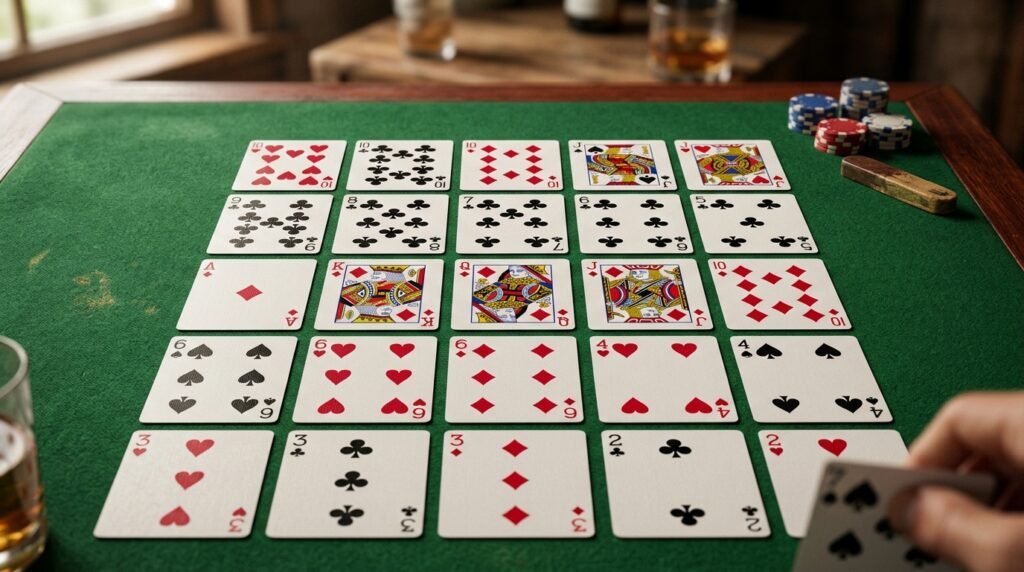
Here’s what that actually looks like in practice: imagine you sit down, get dealt a grid of cards, and your goal is to arrange them into rows or columns that form the best poker hands possible. There’s no dealer to beat, no other players to bluff. It’s just you, a deck, and a payout table.
The misconception 90% of players carry in is thinking these are pure luck games like slots. They’re not. Every version of solitaire poker card games has a genuine decision layer — where you place a card, when you hold, what hand you’re building toward. That decision layer is real and it affects your outcome.
What the generic articles skip is that the volatility between different versions is enormous. Some variants have a house edge under 3%. Others are sitting closer to 8% while the casino promotes them as “player-friendly poker.” The RTP listed in the fine print is the only honest number in the room.
How Solitaire Poker Card Games Actually Work
No two versions are identical, but the core loop is consistent across the most popular formats.
- Receive your starting hand or grid: You’re dealt a set number of cards — sometimes face-up, sometimes a mix. This is where you assess what hands might be possible and start planning your placements. Skipping this read-first moment is the single fastest way to waste a wager.
- Make placement decisions: As new cards are revealed, you choose where they go in your grid or sequence. This is your real gameplay. A decision made for convenience rather than hand-building strategy can cost you two or three pay-table tiers by the end of the round.
- Lock in your hands: Once a row or column is complete, it’s scored. Some versions let you reshuffle or use a wildcard — check before you play, because this changes your entire approach to bankroll management.
- Collect your payout: Completed poker hands trigger payouts based on the pay table. Pairs at the low end, royal flushes at the top. The jackpot is real but rare — don’t build your session around chasing it.
- Evaluate before your next spin or wager: Most players immediately re-ante and go again. Don’t. A two-second check of how your last hand played out tells you whether your strategy is working or whether you’re just gambling blind.
Here’s something most guides won’t tell you: the pay table is the game. Two versions of solitaire poker card games can look identical on screen and have payouts that differ by 15% on a full house. Always pull up the pay table before your first wager — not after you’ve already lost three rounds wondering why your wins feel small.
Solitaire Poker Card Games Benefits Most Players Completely Miss
Your Decisions Actually Lower the House Edge
Unlike slots where the spin outcome is sealed before you click, your choices in solitaire poker card games genuinely shift your expected return. A player making optimal placement decisions on a good variant can realistically push the house edge below 3%. Most players leave that on the table because they treat the decision phase like a formality.
They’re Ideal for Burning Through Wagering Requirements
Here’s one most players never think about. If you’ve got a deposit match bonus with wagering requirements attached, these games can be a smart vehicle — especially lower-volatility versions. Your session lasts longer per pound wagered, which means you’re satisfying the playthrough at a steadier pace without the gut-punch swings you get from high-volatility slots.
You Can Genuinely Improve Over Time
There’s a learning curve here that slots don’t have. After fifty or a hundred hands, you start seeing card placements in terms of expected value rather than gut feel. That improvement is real. It won’t flip the house edge in your favour, but players who understand these games outperform those who don’t — and that gap widens over longer sessions.
Tips That Actually Work
A few things that genuinely matter here, not recycled advice dressed up differently.
Read the Pay Table Like It’s the Rules — Because It Is
The pay table isn’t decoration. It tells you which hands are worth building toward and which ones don’t justify the risk of breaking a partial hand you’ve already assembled. A version that pays 4x on two pairs versus one that pays 2x changes everything about how you should play mid-hand decisions. Spend sixty seconds on this before your first spin.
The Free Play Version Tells You Everything
Almost every platform with solitaire poker card games offers a demo mode, and almost no one uses it properly. Don’t play free mode to “try it out.” Play it to specifically test your placement strategy under different card scenarios. Fifteen minutes of deliberate practice there is worth more than an hour of real-money trial and error. The game mechanics don’t change between free and paid.
Never Chase a Jackpot Hand at the Cost of a Solid One
When you’re four cards into building a flush and a high pair presents itself in a different column, most players ignore the pair. That’s a mistake. The jackpot-tier hands are rare by design — the RTP on those payout tiers is stretched thin. Consistently landing strong mid-tier hands is how you maintain your bankroll over a real session.
Set a Maximum Bet Rule Before You Start — And Keep It
This isn’t generic advice. In these games specifically, a bad run of cards can make higher stakes feel justified because you’re “almost there” on a good hand. That’s the game’s psychology working on you. Decide your maximum bet rule before the session and treat it as a hard ceiling, not a suggestion. Responsible gambling isn’t just about session limits — it’s about not letting a near-miss hand push you into a wager you didn’t plan for.
Mistakes to Avoid With Solitaire Poker Card Games
Honestly, most players repeat the same three errors session after session.
Mistake 1: Treating Every Version the Same What it is: Jumping between different solitaire poker card game variants without checking how each one is structured — different grid sizes, pay tables, and decision points make them genuinely different games. Why players make it: They all look similar at a glance and the casino often groups them together. How to avoid it: Before wagering, check the RTP percentage in the game info tab. Anything below 95% is a significant red flag. Switch game providers if needed.
Mistake 2: Ignoring Remaining Deck Composition What it is: In versions where deck composition matters, players make placement decisions without factoring in what cards are still live. This is the same mistake amateur poker players make. Why players make it: Nobody teaches this, and most players don’t know the information is even available. How to avoid it: Some versions display a card tracker or remaining deck count. Use it. If it’s not displayed, mentally track the high cards you’ve seen — it changes which hand is worth building toward.
Mistake 3: Using Bonus Funds Without Reading Withdrawal Limits What it is: A player wins a solid session using a bonus, then discovers the withdrawal limit caps how much they can actually cash out, or that the game contributed less than 100% toward wagering requirements. Why players make it: The excitement of a bonus makes players skip the fine print. How to avoid it: Before any session funded by a deposit match or free spins equivalent, check the contribution percentage for card games specifically. Some casinos exclude them from wagering entirely.
FAQs
What exactly are solitaire poker card games?
They’re single-player card games where you build poker hands — pairs, flushes, straights — without competing against a dealer or other players. You’re scored purely on what hands you form across a grid or sequence. The format varies by version, but the poker hand rankings are always the scoring system.
How do solitaire poker card games work step by step?
You’re dealt cards one at a time or in a batch, choose where each card goes in your layout, then get paid based on the poker hands those placements create. The key difference from pure luck games: your placement choices genuinely matter and affect the final payout. It’s structured, not random.
Are solitaire poker card games actually worth playing?
Honestly, it depends on what you want from a session. If you enjoy decision-making and want a game where skill actually shifts your odds, they’re a solid choice. If you want big jackpot swings, high-volatility slots will suit you better. At good RTP levels — 96% and above — they’re fair by casino standards.
What are the biggest mistakes to avoid?
The two that cost players the most: playing without checking the RTP first, and ignoring the pay table before deciding which hands to build toward. Both feel like minor steps until they’re quietly bleeding your session dry across fifty hands.
What’s the single best tip for getting the most from solitaire poker card games?
Commit to optimal play on mid-tier hands rather than gambling everything on royal-flush chases. The payout math on the top hands is designed to be exciting, not reliable. Players who consistently land three-of-a-kind and straights outperform jackpot chasers over any real session length. Boring is profitable here.
Final Thought
The most important thing to take away: these are not slot machines wearing a poker costume, and treating them that way is what catches most players out. The decisions you make in solitaire poker card games are real, the RTP differences between variants are significant, and the pay table is something you should understand before you wager a single chip.
Once you know what version you’re playing and what the optimal strategy looks like for that specific format, your sessions become more consistent — not miraculous, but genuinely better. The game providers who make these know most players won’t bother learning the mechanics, and the house edge is priced accordingly for that crowd.
If you take one thing from this: find the version with the highest RTP, pull up the pay table, and play mid-tier hands with discipline. That’s the whole edge available to you — and most players never claim it.