Casinos avoid windows and clocks to remove natural time cues, keep guests focused on games rather than the outside world, maintain consistent lighting and temperature, and support surveillance systems. The design isn’t accidental — it’s a deliberate mix of psychology, security, and building engineering.
Introduction
Walk onto any casino floor and something feels off — but it takes most people a few minutes to figure out what. There’s no daylight. No clocks on the walls. No glimpse of the parking lot outside. It’s disorienting, and that’s exactly the point. Why do casinos have no windows is one of the most searched questions about gambling halls, and the answer touches on architecture, psychology, and even security systems most guests never notice. In this guide, you’ll learn the real reasons behind windowless casino design, how it affects the way people play, the myths surrounding it, and what to actually watch for the next time you step onto a gaming floor.
What Does “No Windows” Really Mean in Casino Design?
When people ask why do casinos have no windows, they’re usually picturing the classic Las Vegas gaming floor — a sprawling, windowless room lit entirely by artificial light. But the “no windows” rule isn’t universal or absolute. It refers specifically to the gaming area itself, not the entire building.
Beginners often assume this is just an old Vegas myth or something exaggerated by movies. In reality, it’s a well-documented practice used across land-based casinos worldwide, especially in properties built before the 2000s. Newer resorts sometimes soften the rule with skylights or window-lined lobbies, but the core gaming floor almost always stays enclosed.
The confusion usually comes from mixing up two ideas: the casino building and the casino floor. A resort might have massive windows in its hotel tower, restaurants, or pool area, while the room where slot machines and table games sit remains completely sealed off from the outside world.
Pro Tip: If you’re ever unsure whether a casino has windows on its gaming floor, check the ceiling instead of the walls — that’s usually where the artificial lighting rig replacing natural light is most obvious.
The History Behind Windowless Casino Floors
The windowless design wasn’t invented overnight. It developed gradually as casino operators studied guest behavior and refined their buildings. Here’s how the practice evolved, step by step:
- Early casinos (1940s-1950s) — Original Las Vegas casinos actually had some windows, but operators quickly noticed that natural light made guests more aware of time passing.
- Mid-century shift (1960s-1970s) — Designers began removing windows and clocks deliberately after observing that guests without time cues stayed longer and took fewer breaks.
- Bill Friedman’s research (1970s-2000s) — Casino design consultant Bill Friedman studied gaming floor layouts extensively and published guidelines that many properties adopted, reinforcing enclosed, maze-like floor plans.
- Modern refinement (2000s-present) — New properties began blending some natural light into non-gaming areas while keeping the core floor sealed, balancing guest comfort with the original design logic.
How Windowless Design Actually Works on the Casino Floor
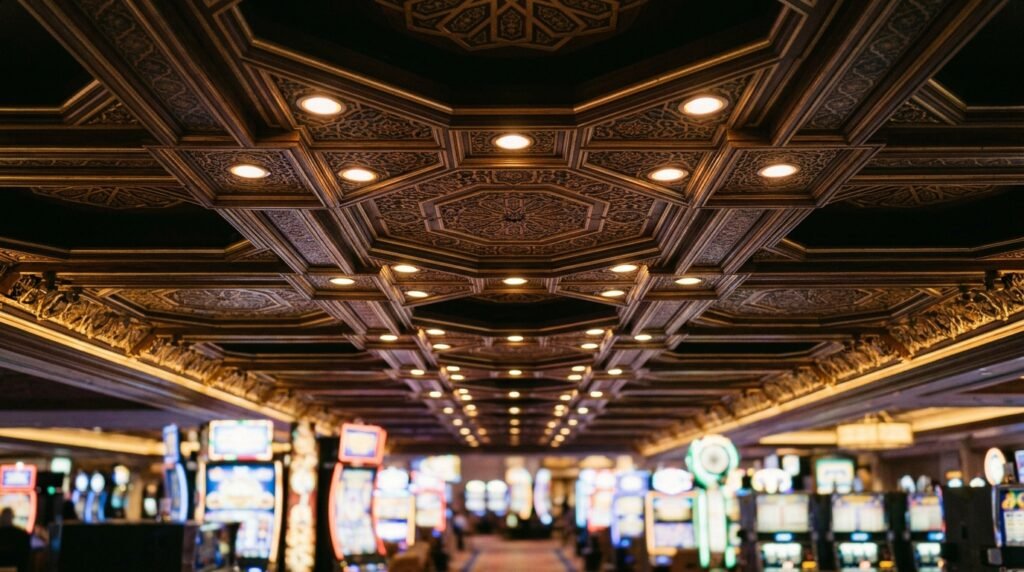
Understanding the mechanics behind this design helps explain why it’s so effective. Casinos combine several elements to create a consistent, immersive environment:
- Controlled lighting — Warm, low-angle lighting mimics evening ambiance regardless of the actual time of day.
- Consistent temperature — Climate control stays fixed year-round, removing another natural cue (like midday heat or evening cool) that might remind guests of the time.
- Sound design — Background music and machine sounds are tuned to feel energizing without being jarring, keeping the sensory environment stable.
- Maze-like layouts — Aisles are arranged so guests naturally wander deeper into the floor rather than walking a straight path to an exit.
Together, these elements create what researchers call a “timeless” environment — one where the usual signals people rely on to track time (sunlight shifting, temperature changing, natural noise) simply aren’t present.
Pro Tip: Next time you’re on a casino floor, try to guess the time without checking your phone. Most beginners are off by two or three hours — that’s the design working as intended.
Common Misunderstandings About Windowless Casinos
Beginners often draw the wrong conclusions about this design choice. Here are the most frequent misunderstandings:
- Mistake: Assuming it’s illegal or hidden. Windowless design is completely legal and openly discussed in architecture and hospitality research — it’s not a secret conspiracy.
- Mistake: Thinking all casinos are windowless. Many modern resorts, especially outside Nevada, include windows in bars, restaurants, and lobbies. Only the core gaming floor typically stays enclosed.
- Mistake: Believing it’s purely psychological trickery. Security and building engineering play just as large a role — enclosed floors are easier to monitor and climate-control consistently.
- Mistake: Confusing this with oxygen or scent pumping myths. Persistent internet rumors about casinos pumping in extra oxygen or specific scents to keep guests awake are unverified and not supported by credible sources.
Casino Design Terms You Should Know
If you want to understand casino architecture beyond the windows question, these terms come up often:
- Gaming floor — The area containing slot machines and table games, distinct from restaurants, hotels, or lobbies.
- Sightlines — The visual paths designers control so guests notice certain games or areas as they walk through.
- Ambient design — The combined use of lighting, sound, and temperature to shape mood without guests consciously noticing.
- Surveillance integration — How camera systems and floor layout work together for security monitoring.
- Maze layout — A floor plan style using curved or irregular aisles instead of straight, grid-like paths.
How to Stay Aware of Time and Surroundings on a Casino Floor
Understanding the design doesn’t mean avoiding casinos — it means visiting with more awareness. A few practical habits help:
- Set a phone alarm or timer before heading onto the floor, since ambient clocks won’t be there to remind you.
- Pick a meeting spot near an exit or window-lined area, like a lobby or restaurant, to reset your sense of time periodically.
- Take breaks in daylight-adjacent spaces, such as a hotel pool deck or entrance, to reconnect with the actual time of day.
- Notice the layout consciously — recognizing maze-like aisle patterns can help you navigate back to an exit more easily.
Pro Tip: Many guests find it helpful to treat a casino visit like a movie — decide on a set “runtime” beforehand, since the environment itself won’t give you natural cues to wrap up.
Myths vs. Facts About Casino Windows
| Myth | Fact |
|---|---|
| Casinos pump in extra oxygen to keep people awake | No credible evidence supports this; it’s an urban legend repeated online |
| All casinos have zero windows anywhere in the building | Only the core gaming floor is typically windowless; lobbies, restaurants, and hotel towers often have windows |
| The lack of windows is illegal or hidden from regulators | Casino design is publicly documented and studied in hospitality architecture research |
| Windowless design is purely about tricking people | Security monitoring and stable climate control are equally important, practical reasons |
Comparison Table: Casino Design Approaches by Property Type
| Property Type | Gaming Floor Windows | Common Reason |
|---|---|---|
| Classic Las Vegas Strip casino | None on gaming floor | Traditional Friedman-style design focused on time disorientation reduction |
| Modern integrated resort | None on gaming floor, windows elsewhere | Balances guest comfort in non-gaming areas with traditional floor design |
| Riverboat/regional casino | Often limited or none | Space constraints and consistent climate control |
| Tribal casino resort | Varies widely | Design choices depend heavily on individual property and region |
Conclusion
The absence of windows on a casino floor isn’t a random architectural quirk — it’s a deliberate combination of psychology, consistent climate control, and security planning that developed over decades. To recap the essentials: windowless design targets the gaming floor specifically (not the whole building), it works by removing natural time cues like sunlight and temperature shifts, and much of what people assume about the practice — like oxygen pumping — is myth rather than documented fact.
Next time you walk onto a gaming floor, see if you can spot the maze-like aisles or notice how the lighting stays perfectly consistent no matter the hour. Curious about what else shapes the casino experience behind the scenes? A guide on how casino floor layouts are designed to guide foot traffic makes a great next read.
After all, the room was built to make you forget the clock — now you know why.
FAQs
Why do casinos have no windows?
Casinos avoid windows on the gaming floor mainly to remove natural time cues like sunlight and shifting daylight. Without a visible sunrise or sunset, guests lose track of how long they’ve been inside. This design choice, refined over decades, works alongside consistent lighting and climate control to create a stable, immersive environment on the floor itself.
Do all casinos lack windows?
No. Only the core gaming floor is typically windowless. Many modern resorts include windows in these areas:
- Hotel lobbies and check-in areas
- Restaurants and bars
- Pool decks and outdoor spaces
The gaming floor specifically tends to stay enclosed regardless of the property’s overall design.
3. Is it true casinos pump in extra oxygen?
This is a widely circulated myth without credible supporting evidence. There’s no verified industry standard confirming casinos add extra oxygen to gaming floors. The idea likely persists because windowless, artificially lit rooms already feel unusual, leading people to assume something extra must be happening with the air.
Why do casinos have no clocks either?
Clocks are removed for the same reason as windows: to limit obvious time cues. If guests can’t easily check a wall clock or glance outside, they’re less likely to notice how much time has passed during a visit. It’s part of the same broader design philosophy focused on ambient consistency.
Why do casinos have no windows but hotels attached to them do?
Hotel towers, restaurants, and lobbies serve different purposes than the gaming floor. Guests expect natural light and views in hospitality spaces, so operators often include windows there while keeping the gaming area itself enclosed and climate-controlled for consistency and security.
Does windowless design actually affect how long people stay?
Research on casino architecture, including work by design consultant Bill Friedman, suggests ambient design elements like lighting and layout can influence guest behavior. However, individual habits, personal awareness, and self-set time limits play a significant role regardless of the surrounding environment.