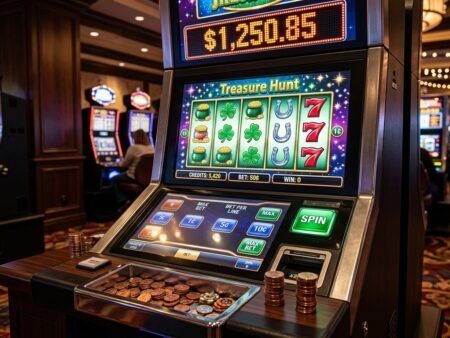
Progressive jackpot slots online are games where a small percentage of every wager across a network of machines feeds a shared prize pool. That pool keeps growing until a specific combination, bonus trigger, or random event releases it — then it resets and starts building again.
Introduction
A single progressive jackpot slot machine can quietly grow its prize pool by thousands of dollars while nobody is even looking at it. That’s the strange part about progressive jackpot slots online — the jackpot doesn’t wait for a specific player to trigger it. It grows because of everyone playing, everywhere, all at once. If you’ve ever wondered why these games behave so differently from a regular slot, or why the jackpot number keeps climbing even overnight, you’re about to find out exactly how the system works, what the rules really mean, and which beginner assumptions are flat-out wrong.
What Are Progressive Jackpot Slots (And Why Beginners Get Confused)
Most beginners assume a progressive jackpot slot works exactly like a regular slot machine, just with a bigger number on the screen. That assumption is where the confusion starts.
A standard slot has a fixed maximum payout built into its paytable. A progressive slot, on the other hand, has a jackpot that literally increases in real time as people play. The number you see isn’t decoration — it’s a live, constantly updating value tied to actual wagering activity happening across a network of connected machines or online instances.
Beginners struggle here for one main reason: they can’t see the mechanism. With a regular slot, the math feels intuitive — the paytable tells you everything. With a progressive slot, part of the payout structure lives outside the game itself, in a shared pool you can’t directly observe. That invisible layer is what makes the game feel mysterious, even though it follows very defined rules.
How Progressive Jackpots Actually Build Up (Step-by-Step)
Here’s the mechanical process, broken down in order:
- A base jackpot is set. Every progressive starts with a “seed” amount — the minimum value the jackpot resets to after it’s won.
- A small percentage of every bet is contributed. Each wager placed on the game (or network of games) sends a tiny fraction into the jackpot pool.
- The pool updates continuously. This is why the number on-screen climbs second by second — it reflects real contributions happening in real time.
- A trigger condition is defined. This could be a specific symbol combination, a bonus round, or in some systems, a random event unrelated to your own spin outcome.
- The jackpot pays out when the trigger occurs. Once hit, the full pool amount is released to the winning result.
- The jackpot resets to its seed value. The cycle then starts over from scratch.
Understanding this sequence is the difference between guessing how the game works and actually knowing it.
The Mechanics Behind the Curtain: RNG, Networks, and Triggers
Every spin on a progressive slot — like any modern slot — is governed by a Random Number Generator (RNG). This is the software system that determines outcomes independently of the jackpot pool itself.
Here’s the part that trips people up: the RNG decides your spin result, and separately, the jackpot trigger condition decides whether that spin also happens to unlock the jackpot. These are two different systems working together, not one combined calculation.
Progressive jackpots also come in different structural types:
- Standalone progressives grow only from a single machine’s own wagers.
- Local progressives pool contributions from multiple machines within a single site or platform.
- Networked (wide-area) progressives connect machines across many different platforms, which is why these jackpots often reach the largest totals.
Pro Tip: The wider the network feeding a jackpot, the bigger it can grow — but that also usually means the odds of triggering it are lower, since more players are drawing from the same pool.
Common Beginner Mistakes to Avoid
New players tend to misunderstand progressive slots in a few predictable ways:
- Assuming a bigger jackpot number means it’s “due” to hit. Jackpot triggers are typically independent, random events — the size of the pool doesn’t influence the odds of the next spin.
- Not checking the bet requirement. Many progressive jackpots only qualify for the full jackpot prize if a specific bet level or max-bet condition is met.
- Confusing “progressive” with “bonus round.” A progressive jackpot and a slot’s regular bonus feature are separate systems, even though they sometimes overlap visually.
- Ignoring the RTP difference. Progressive slots often have a slightly different base-game Return to Player (RTP) than non-progressive versions, since part of the RTP funds the jackpot pool.
Key Terms and Terminology Explained
A few terms come up constantly in progressive jackpot discussions, and knowing them makes everything else easier to follow:
- Seed value — the starting/reset amount of the jackpot.
- Contribution rate — the percentage of each bet that feeds the jackpot pool.
- Must-hit-by / must-drop — a jackpot type guaranteed to trigger before it reaches a disclosed ceiling amount.
- RTP (Return to Player) — the theoretical percentage of wagers returned to players over time.
- Trigger mechanism — the specific event or combination that releases the jackpot.
How to Read a Progressive Slot Before You Understand It Fully
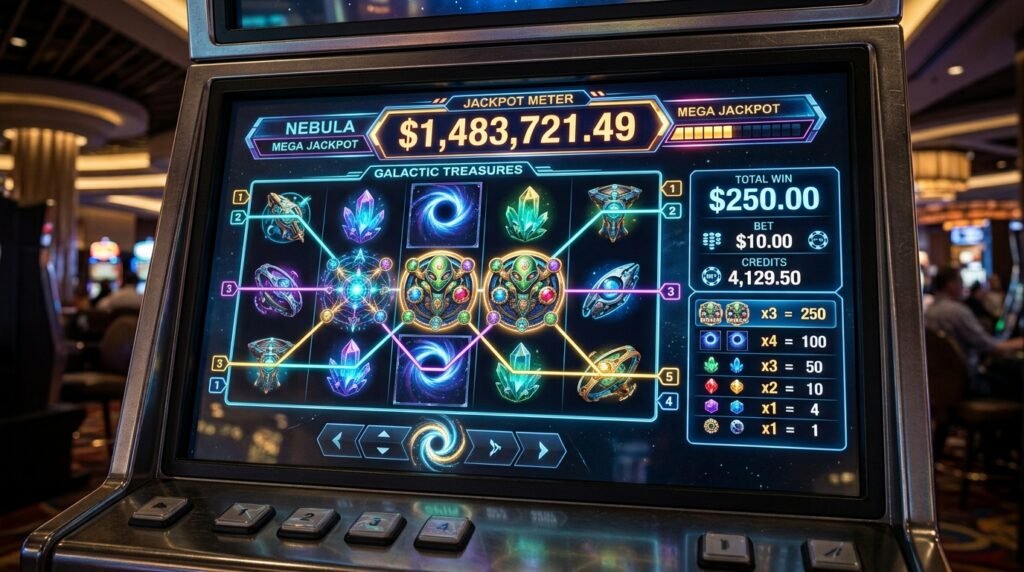
You don’t need to be an expert to evaluate a progressive slot intelligently. A few educational habits help:
- Check the paytable for the jackpot’s trigger condition — it’s usually disclosed clearly.
- Look for whether max bet is required for jackpot eligibility.
- Note whether it’s a standalone, local, or wide-area progressive, since that affects both size and frequency of hits.
- Compare the base RTP to a non-progressive version of a similar game, if available.
This kind of comparison-based thinking is far more useful than trying to “predict” when a jackpot will land, since trigger events in properly regulated systems are independent of jackpot size.
Myths vs Facts About Progressive Jackpot Slots
| Myth | Fact |
|---|---|
| “The jackpot is due after a certain size” | Trigger events are independent; size doesn’t affect probability |
| “All progressive slots require max bet” | Some do, some don’t — it depends on the specific game’s rules |
| “Bigger jackpot networks always mean better odds” | Wider networks usually mean lower individual odds, not better ones |
| “Progressive and regular slots have the same RTP” | Progressive RTP is typically split between base game and jackpot contribution |
| “Only one symbol combination can trigger it” | Some games use random mystery triggers unrelated to any symbol combo |
Progressive Jackpot Types Compared
| Type | Contribution Source | Typical Jackpot Size | Trigger Frequency |
|---|---|---|---|
| Standalone | Single machine | Smaller | More frequent |
| Local (in-house) | Multiple machines, one site | Medium | Moderate |
| Wide-area (networked) | Many platforms | Largest | Least frequent |
| Must-hit-by | Varies | Capped, guaranteed by threshold | Predictable ceiling |
Conclusion
Progressive jackpot slots online aren’t magic — they’re a mechanical system built on shared contributions, independent trigger events, and clearly defined (if not always obvious) rules. The three things worth remembering: the jackpot grows from real wagering activity across a network, the RNG and the jackpot trigger are separate systems, and jackpot size never predicts when it will hit. Once you understand that structure, the whole game stops feeling mysterious and starts feeling logical.
So next time you see a progressive jackpot number climbing on screen, what do you think is actually happening behind it? If you want to go deeper, understanding how RNG certification works is a natural next read.
Some numbers grow the loudest right before they quietly reset — and now you know exactly why.
FAQs
What exactly makes a slot “progressive”?
A progressive slot is one where the jackpot value increases over time, funded by a small percentage of every wager placed on the game or its connected network. Unlike a fixed-payout slot, the jackpot total isn’t static — it climbs continuously until triggered, then resets to a starting seed value and begins growing again.
Do progressive jackpot slots online require a maximum bet?
It depends on the specific game. Some progressive slots require max bet to qualify for the full jackpot prize, while others allow any bet size to be eligible. The safest approach is to: 1) check the paytable, 2) look for jackpot eligibility rules, and 3) confirm bet requirements before assuming you qualify.
Are progressive jackpot slots harder to win than regular slots?
The base-game outcomes work the same as any RNG-driven slot. What differs is the additional, separate jackpot trigger event, which is typically rarer by design — especially on wide-area networked progressives where the pool is shared across many players.
How is the RTP different on progressive jackpot slots online?
Progressive slots often split their theoretical RTP between the base game payouts and the jackpot contribution. This means the standalone base-game RTP can appear slightly lower than a non-progressive version of the same title, since part of every wager funds the shared jackpot pool.
What’s the difference between local and wide-area progressive jackpots?
Local progressives pool contributions from machines within a single site or platform, while wide-area progressives connect machines across many different platforms. Wide-area jackpots typically grow to larger totals but come with lower individual odds of triggering, since more total wagering activity feeds the same shared pool.
Can a progressive jackpot slot’s trigger be predicted?
No. Trigger mechanisms in properly regulated progressive jackpot slots online are governed by independent random events or RNG-based conditions, meaning previous spins and current jackpot size don’t influence the probability of the next trigger. This is a core structural fact, not a strategy detail.