The Russian roulette card game is a suspense-based party game where one card (often an Ace or Joker) represents “the bullet.” Players draw cards in turn, and whoever draws the marked card “loses.” It’s a game of pure chance with no skill involved, popular for group gatherings and dares.
Introduction
Ever wondered why a simple deck of cards can create the same tension as a loaded chamber? That’s the exact appeal behind the russian roulette card game, a tabletop twist on the classic gamble-with-fate concept, minus any actual danger. Unlike its namesake, this version replaces bullets with playing cards, turning risk into a purely psychological experience. In this guide, you’ll learn exactly how the game is set up, the step-by-step rules, common variations, mistakes beginners make, and the terminology you need to sound like you’ve played it for years. By the end, you’ll understand not just how to play, but why this game has stayed popular at parties, dorm rooms, and family game nights for decades.
What Is the Russian Roulette Card Game (And Why Beginners Struggle With It)
At its core, the game strips away complexity. There’s no betting, no complicated scoring, and no strategy to memorize. That simplicity is exactly why newcomers sometimes overthink it.
The confusion usually comes from expectations carried over from other card games. Players assume there must be a way to influence the outcome — a bluff, a tell, a calculated move. There isn’t. The entire mechanic relies on random chance, and once you accept that, the game becomes far less intimidating.
Beginners also struggle because house rules vary wildly between friend groups. One table might use a single marked card from a full 52-card deck, while another uses a small custom pile of five or six cards. Neither version is “wrong,” but not knowing which one you’re playing can throw off your expectations before the first card is even drawn.
Step-by-Step Rules
Here’s the most common version of the rules, broken down simply:
- Choose the “bullet” card — usually a single card like the Ace of Spades or a Joker.
- Shuffle it into a small pile of cards (commonly 5, 6, or a full deck depending on house rules).
- Place the pile face-down in the center of the table or pass it around.
- Each player draws one card on their turn without looking at it first.
- Reveal the card immediately after drawing.
- If it’s a normal card, play passes to the next player.
- If it’s the marked card, that player is “out” (or takes whatever penalty the group agreed on beforehand).
- Repeat until someone draws the marked card, ending the round.
How the Game Mechanics Actually Work
The mechanics are deliberately basic, which is part of the appeal. Since the marked card is shuffled randomly, the odds of drawing it shift with every card removed from the pile. If you’re playing with a six-card pile and one bullet card, the first draw carries a 1-in-6 chance. If that card is safe, the second draw becomes 1-in-5, then 1-in-4, and so on.
This shrinking probability is what creates the escalating tension players talk about. Early draws feel relatively safe, but as the pile shrinks, the odds tighten uncomfortably fast. Some versions reshuffle the marked card back into a fresh pile after each “hit,” resetting the odds entirely for the next round rather than letting them compound.
Common Beginner Mistakes to Avoid
New players tend to make the same handful of errors:
- Assuming skill matters. There’s no strategic play here — it’s pure probability.
- Not agreeing on rules beforehand. Groups that skip this step often argue mid-game about what counts as “out.”
- Peeking at cards early. Half the tension comes from not knowing, so skipping the reveal ruins the pacing.
- Using a stacked or marked deck by accident. Always shuffle thoroughly; a poorly shuffled pile can cluster cards unfairly.
- Confusing this with gambling formats. This is a chance-based party game, not a wagering system, and treating it otherwise misses the point entirely.
Pro Tip: Before starting, write down your house rules on a sticky note. It prevents disputes later and keeps the game moving smoothly.
Terms and Terminology Explained
Getting familiar with the language makes the game easier to follow, especially in group settings where terms get thrown around quickly.
- The Bullet Card — the single marked card that ends a player’s turn in the round.
- The Pile — the smaller set of cards used instead of a full deck, controlling how quickly the odds shift.
- A Clean Draw — pulling a normal, unmarked card.
- Reshuffle Rule — a house rule where the bullet card goes back into the pile after being drawn, resetting odds for the next round.
- Elimination Format — a version where players who draw the bullet card are out entirely, rather than just ending their turn.
Tips for Understanding the Game Better
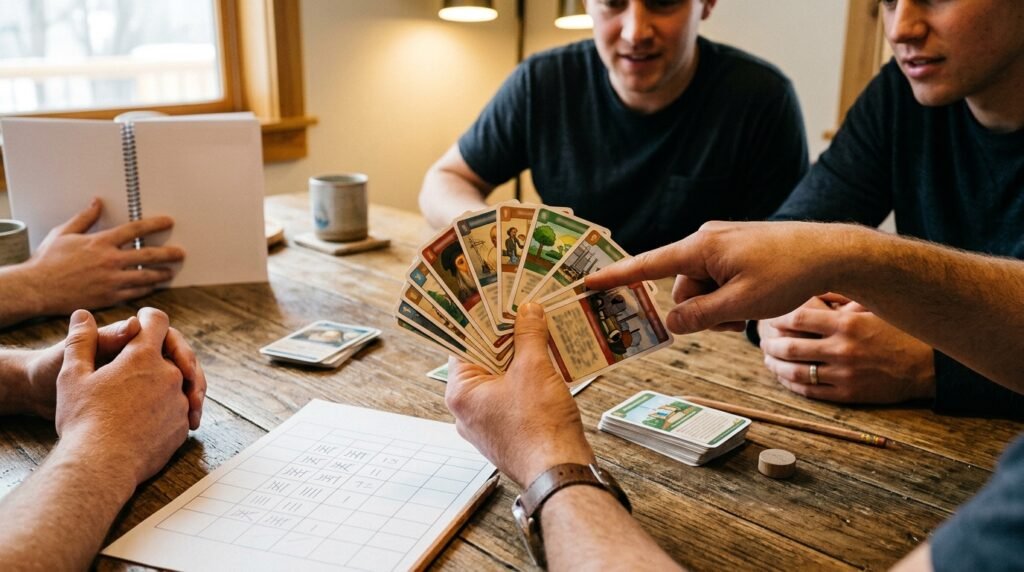
Since there’s no strategy to master, “tips” here are really about understanding probability and improving the experience rather than improving your odds.
First, recognize that a smaller pile always means faster, higher-stakes tension, while a larger pile stretches the suspense out longer. Groups that want quick rounds tend to prefer 5-6 card piles; groups that want a slow build often use a full deck.
Second, understand that reshuffling after each hit keeps the odds consistent round to round, while not reshuffling means the game naturally speeds toward its conclusion as fewer cards remain.
Pro Tip: If you’re introducing the game to a new group, run one practice round without any penalties attached. It helps everyone understand the flow before stakes (even playful ones) are added.
Myths vs. Facts
Myth: The dealer can control who draws the bullet card.
Fact: In a properly shuffled pile, no one — including the dealer — has any influence over the outcome.
Myth: Watching how someone draws can reveal the marked card.
Fact: Cards are identical from the back; there’s no physical “tell” in a fair game.
Myth: This game is directly tied to real-money gambling.
Fact: It’s a chance-based social game with no wagering mechanics built in, though some groups informally attach dares or small forfeits.
Myth: A full deck version is more dangerous (in terms of losing) than a small pile.
Fact: It’s actually the opposite in early rounds — the odds of drawing the bullet card are lower with more cards in play.
Comparison Table: Common Variations
| Variation | Pile Size | Reshuffle? | Tension Level |
|---|---|---|---|
| Classic Small Pile | 5-6 cards | No | High, escalates fast |
| Full Deck Version | 52 cards | No | Slow build, long game |
| Reshuffle Format | Any size | Yes | Consistent odds each round |
| Elimination Style | 5-6 cards | No | Player-out format, fast-paced |
| Team Version | 10-12 cards | Optional | Group-based tension, slower |
Conclusion
The russian roulette card game works because it strips away complexity and leans entirely on suspense and probability. To recap: the rules are simple (draw until someone hits the marked card), the mechanics revolve around shrinking or resetting odds depending on house rules, and most beginner mistakes come from assuming skill plays a role when it doesn’t.
If you’re curious about other chance-based party games with similar tension-building mechanics, it’s worth exploring games that use dice or timed elimination formats next.
So, next time you shuffle that pile, will you play it safe with a full deck, or go for the fast, nerve-wracking version? Either way, now you know exactly what you’re getting into.
FAQs
What is the russian roulette card game?
It’s a chance-based party game where one marked card, often an Ace or Joker, is shuffled into a small pile. Players draw in turn, and whoever draws the marked card is “out” or faces an agreed-upon forfeit. There’s no skill involved — only random probability decides the outcome each round.
How many cards are used in the russian roulette card game?
Most versions use a small pile of 5 to 6 cards, though some groups use a full 52-card deck for a longer, slower build. The number of cards directly affects how quickly the odds shift: 1) small piles create fast tension, 2) full decks create a gradual buildup, 3) team versions often use 10-12 cards for group play.
Is the russian roulette card game based on skill or luck?
It’s entirely luck-based. Since the marked card is shuffled randomly, no amount of strategy, bluffing, or observation changes your odds of drawing it. This is part of what makes the game accessible to beginners and experienced players alike.
What happens when someone draws the bullet card?
Depending on house rules, that player is either eliminated from the round, takes a light forfeit agreed upon before playing, or simply ends their turn while the game continues. Groups typically decide this rule before starting to avoid disagreements mid-game.
Can the odds be calculated in advance?
Yes. If you know the pile size and how many marked cards are included, you can calculate the probability before each draw. For example, a 1-marked-card pile of six starts at a 1-in-6 chance, increasing as unmarked cards are removed, unless a reshuffle rule resets it.
Is this game related to real gambling?
Not directly. The core version has no betting or wagering mechanics — it’s a suspense-driven social game. Some groups informally attach small dares or forfeits, but the base game itself is simply about the tension of the draw, not financial risk.