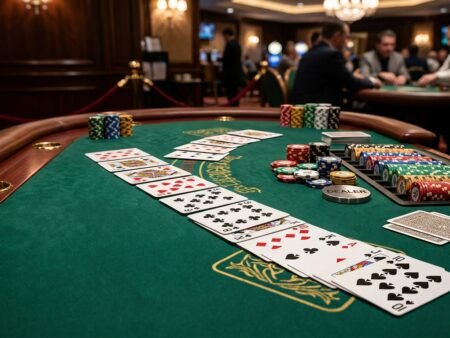
Casino card tables are green because the felt surface was originally designed to mimic lawn games — particularly billiards and lawn bowls — played by European nobility in the 15th and 16th centuries. When card games moved indoors, the green cloth came with them. But here’s what most people miss: green stuck around not just for tradition, but because it genuinely reduces eye strain during long sessions, makes card suits easier to read against a contrasting background, and keeps players mentally calm at the table — all of which casinos are well aware of.
Introduction
The colour green has been linked to gambling tables for over 500 years — longer than any casino bonus, wagering requirement, or loyalty program you’ll ever encounter. And yet, almost nobody actually knows why. Why are casino card tables green? Most people assume it’s just tradition. That’s partly true, but it’s also the laziest answer possible. The real story connects European aristocracy, human psychology, and some genuinely clever casino design — all rolled into one colour choice. You’ll understand why casinos have never seriously considered switching, why that green felt does something to your brain that most players don’t realise, and why the colour choice is just as deliberate as every other decision made on a casino floor. Stick around — this one’s more interesting than it looks.
What Are Casino Card Tables Green — And Where Did This Come From?
Imagine you’re a French nobleman in the 1400s. You spend your afternoons playing lawn bowls or billiards on grass, and in the evening, you move inside to play cards. The problem? Cards on a wooden table look terrible, slide everywhere, and feel nothing like the satisfying surface you just played on outside. So someone throws green cloth on the table. Problem solved.
That’s the actual origin. Why are casino card tables green comes down to a direct visual and tactile imitation of outdoor lawn games that were fashionable among the elite. The green baize — a specific type of woven wool fabric — was already being used on billiard tables by the 1500s, and card games simply borrowed it. When gambling houses formalised in 17th-century Europe, the green table was already the standard.
Here’s what 90% of casino articles get wrong: they treat this as purely historical. They say “green comes from tradition” and leave it there. But casinos are not sentimental businesses. They don’t keep something around for 500 years out of nostalgia. The green table survives because it still works — practically, psychologically, and strategically.
The house edge is built into every game. Every spin, every wager, every hand of blackjack — the maths always favours the house. But a comfortable player is a player who stays longer, and a player who stays longer benefits the house more. Green contributes to that comfort in ways that aren’t immediately obvious.
How the Green Table Actually Works — and Why It’s Still Used
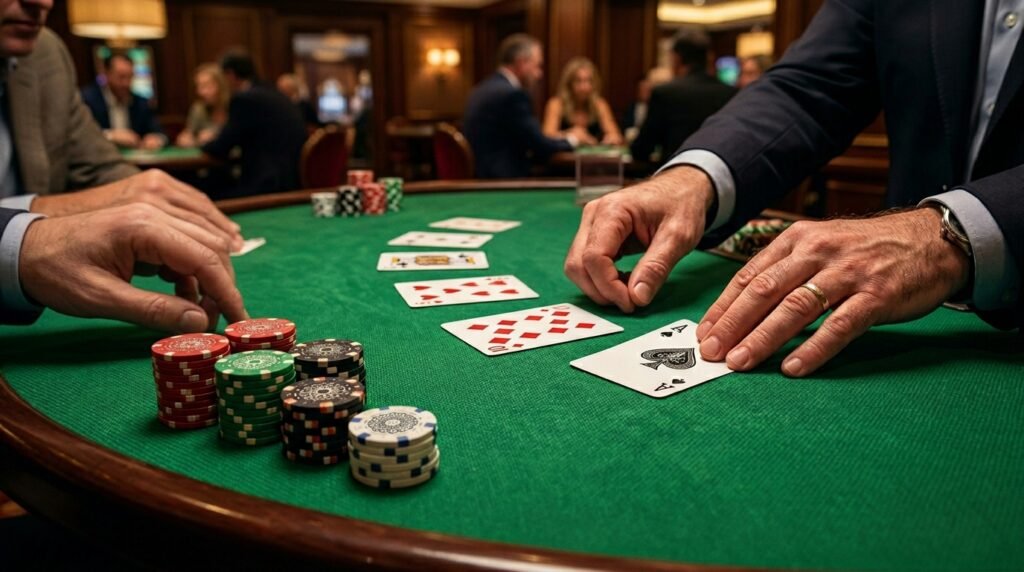
Eye strain reduction: Card games involve constant focus — reading suits, tracking values, watching other players’
hands. Green sits almost exactly in the middle of the visible light spectrum, which means your eyes work less hard to process it. After two hours at a blackjack table, this matters. A white or red surface would be genuinely fatiguing.
Contrast clarity: The four card suits — hearts, diamonds, clubs, spades — in red and black read sharply against green felt. It’s not accidental. The contrast makes misreading a card harder, which matters both for players managing their bankroll management and for dealers running fast-paced games.
Psychological calm: Green is consistently associated with stability and calm in colour psychology research. Casinos know that a calm player makes more measured bets. An anxious player makes erratic bets, hits their withdrawal limit too fast, and leaves. Calm players stay and play — which serves the house edge over time.
Surface performance: Green baize provides the right amount of friction. Cards slide smoothly but don’t fly. Chips sit without rolling. The practical performance of the fabric has always matched the visual choice.
Here’s something most guides won’t tell you: the specific shade of green matters. Older casinos tend to use darker, more muted greens. Newer casino floors — especially in online live dealer setups — have shifted toward brighter or teal-adjacent greens. That’s not a style refresh. It’s a calculated response to how those colours read under LED lighting versus the incandescent light of traditional casino floors. The game provider designing a live dealer stream is thinking about the same thing a casino floor manager thought about in 1960.
Why Are Casino Card Tables Green — Benefits Most Players Completely Miss
Benefit 1: It Trains Your Focus Without You Noticing
The neutral green background strips away visual distraction. When you sit at a green table, your eyes naturally settle on the cards, the chips, and the action — not the surface itself. For players working on bankroll management and trying to track every hand’s outcome, this passive focus aid is genuinely useful. Most players never consciously notice it, which is exactly why it works.
Benefit 2: It Signals a “Real” Game Environment
There’s a reason online casinos spend serious money making their live dealer tables look like traditional green felt, even in virtual environments. Green visually signals legitimacy and seriousness. When you see a green table, your brain registers “this is a real card game” rather than a casual interface. That mental framing changes how disciplined you are — which tends to mean better decisions around things like your maximum bet rule and when to walk away.
Benefit 3: It Reduces Impulse Errors During Fast Play
Calming colours measurably slow reactive decision-making. In a fast game like blackjack — where decisions happen in seconds — a player sitting at a green table is statistically less likely to make a pure panic move than one at a visually aggressive red or black table. Whether you’re playing for jackpot glory or just trying not to bust on 14, that subtle brake on impulsive action can save your session.
Tips That Actually Work
Read the table before you read the cards
Before you sit down at any live dealer or physical table, look at the lighting and the felt condition. Worn, patchy felt affects how cards slide and how clearly suit colours read — which genuinely affects how fast you process hands. A well-maintained table is a small but real advantage in terms of focus and pace.
Use the green table as a mindset reset
Here’s something nobody really talks about: when you’re on a losing streak and feeling reactive, look at the table surface for a few seconds before your next hand. It sounds odd, but deliberately focusing on the neutral green — rather than the last bad outcome — uses the table’s calming effect actively instead of passively. It interrupts the emotional spiral that causes players to chase losses.
Understand that the table design serves the casino too
Every element of a casino table — including the green — is designed to keep you comfortable and engaged. That’s not sinister, but it means you should be managing your session consciously. Set a loss limit before you sit down, decide on a cashout point when you’re winning, and don’t let the comfortable environment trick you into staying longer than your bankroll can handle.
In live dealer games, pay attention to colour temperature
The shade of green on a live dealer stream is influenced by the studio’s lighting rig. Cooler, bluer-green tables tend to feel more corporate and fast-paced. Warmer greens feel more traditional. If you find yourself making better decisions in one environment than another, this might be part of why — and choosing platforms accordingly is a legitimate strategy.
Mistakes to Avoid With Casino Card Tables
One mistake almost every new player makes at the table is avoidable once you see it clearly.
Mistake 1: Assuming the table environment is neutral
What it is: Many players believe the casino floor layout, lighting, and table design are just aesthetic choices. They’re not. Every element — including the green felt — is chosen to influence how long you stay and how you feel while playing.
Why players make it: It looks like décor, so it feels like décor.
How to avoid it: Walk in knowing the environment is designed to work on you. Decide your wager amounts and responsible gambling limits before you sit — not once you’re settled into the comfortable, well-lit green table.
Mistake 2: Ignoring eye fatigue in long sessions
What it is: Players who grind long sessions at physical or live dealer tables don’t account for visual fatigue — even though the green table is designed to minimise it. It minimises it; it doesn’t eliminate it.
Why players make it: If you feel fine mentally, it’s easy to miss the physical tiredness building up.
How to avoid it: Set a time limit alongside your bankroll limit. Stand up, rest your eyes, and return fresh — or don’t return at all. No bonus round or free spins offer is worth playing badly because you’re worn out.
Mistake 3: Treating all green tables as equal
What it is: Assuming that because the table is green, the game conditions are standard. In reality, RTP (return to player), house edge, and volatility vary significantly between tables even within the same casino.
Why players make it: The visual consistency of green felt creates a false sense of uniformity.
How to avoid it: Always check the specific game’s rules, house edge, and payline structure before you sit. The table looks the same. The math doesn’t have to be.
FAQs
What exactly is why are casino card tables green about?
It refers to the historical and practical reasons casino card tables use green felt. The tradition started in 15th-century Europe when card games adopted the green baize already used for lawn sports and billiards. It persisted because green genuinely reduces eye strain, improves card-suit contrast, and creates a psychologically calming environment that keeps players comfortable and focused at the table.
How does why are casino card tables green work step by step?
The origin: green baize from outdoor games gets adopted for indoor card tables. The survival: casinos discover players stay longer and play more comfortably on green surfaces. The psychology: green’s position in the light spectrum reduces eye fatigue. The design: modern casinos and live dealer providers continue the tradition with deliberate colour calibration for lighting conditions.
Is why are casino card tables green actually relevant for players?
Honestly, yes — more than most people think. Understanding that the table environment is deliberately designed helps you approach sessions with more self-awareness. It won’t change your RTP or house edge, but knowing why the setting feels naturally comfortable may prompt you to be more intentional about your bankroll management and time at the table.
What are the biggest mistakes to avoid with casino card tables?
The two that cost players the most: assuming the comfortable environment is neutral when it isn’t, and playing longer than planned simply because the table feels right. Always set your limits before you sit — not once you’re in the groove of a game and the green felt has done its job on your focus.
What’s the single best tip for getting the most from casino card tables?
Use the table’s calming effect deliberately. When you feel reactive — after a bad hand, a missed jackpot, a frustrating run — pause, look at the table surface, and reset before your next decision. The green is doing that work passively anyway. Doing it actively gives you back a small but real edge over your own impulses.
Final Thoughts
The answer that most people accept — “it’s just tradition” — is both technically true and almost entirely useless. The real picture is that green survived five centuries of casino evolution because it genuinely works: it reduces visual fatigue, improves readability, and creates the kind of calm focus that keeps players engaged without tipping into anxiety. Casinos don’t keep anything around that doesn’t serve them, and the green table serves them because it also, genuinely, serves you as a player. The next time you sit down at a blackjack table, a poker game, or tune into a live dealer stream, you’re looking at a design decision that’s been tested by half a millennium of play — and the fact that why are casino card tables green has such a satisfying answer is exactly why the question is worth asking.